AI Clothes Changer

AI Clothes Changer Pro

Upload one model photo and one clothing photo. AI changes the outfit while keeping the same person, pose, framing, lighting and background.

Reference outfit transfer examples

See how two-photo clothes changing works

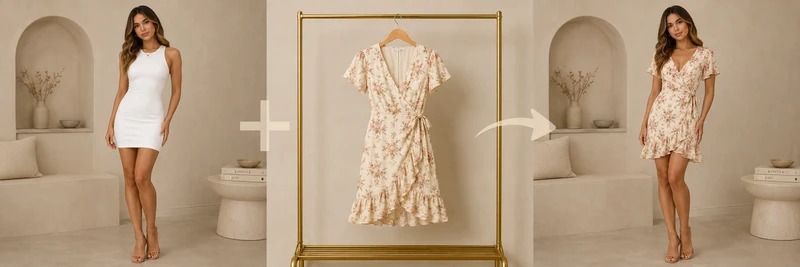
The first image provides the person and scene. The second image provides the garment. The generated result combines them while aiming to preserve identity, pose, framing and background.

AI clothes changer workflow showing a woman, a floral dress reference and the final changed outfit
Model photo + clothing reference → AI outfit transfer result.
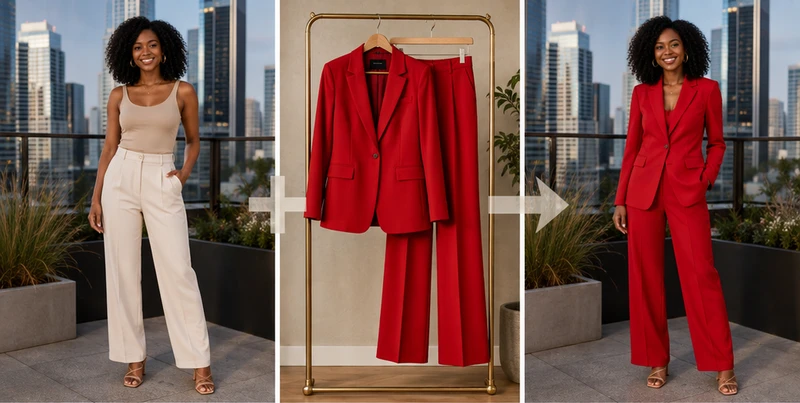
Black woman wearing a red suit transferred from a separate clothing reference image

Transfer complete matching sets

Use a reference that contains a coordinated outfit, such as a blazer with matching trousers. The tool uses the garment design as the reference while keeping the target model’s face, hairstyle, body position and city background.

  • Suitable for suits, uniforms and coordinated sets
  • Preserves the target person rather than the reference model
  • Maintains the original scene whenever possible
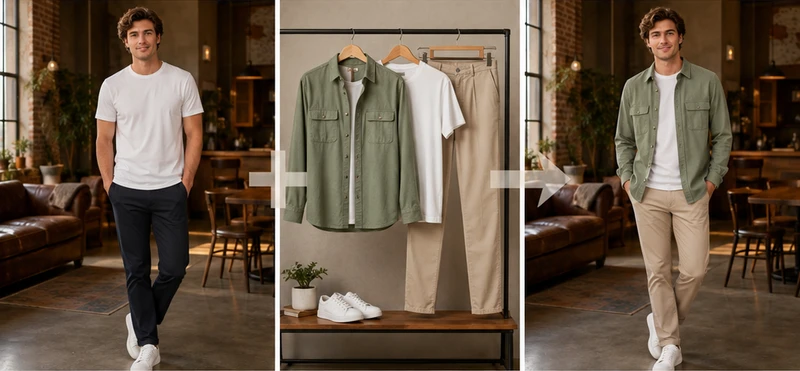
Man wearing a casual green overshirt and beige trousers from a reference outfit

Combine shirts, jackets and trousers naturally

Layered casual outfits can be transferred as a coordinated look. Clear garment edges, visible sleeves and a similar front-facing viewpoint help the AI reproduce the shirt, outer layer and trousers with more believable fit and proportions.

  • Works with layered menswear and everyday outfits
  • Retains pose, shoes and surrounding environment
  • Best with a clear full-body model photo
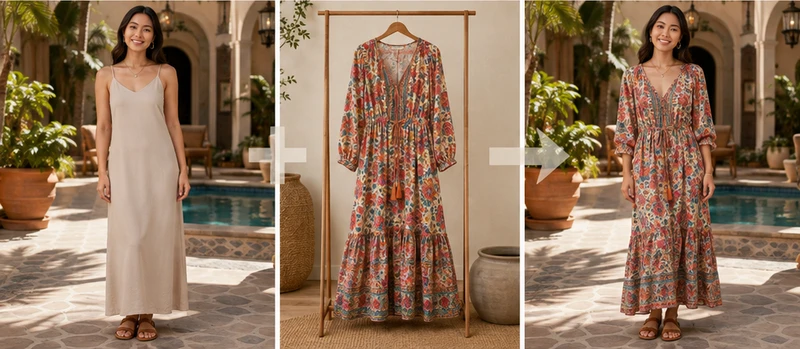
Asian woman wearing a patterned long dress transferred from a hanging garment photo

Keep distinctive prints and garment shape

Patterned dresses are easier to reproduce when the reference clearly shows the neckline, sleeves, waist, hem and print. The system aims to adapt those details to the target body without copying the clothing-reference background.

  • Useful for floral, geometric and decorative fabrics
  • Supports dresses photographed on a hanger
  • Clear fabric detail improves pattern continuity
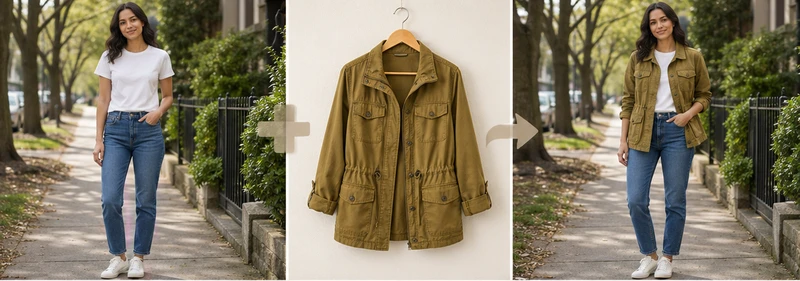
Woman adding an olive utility jacket while retaining jeans, shoes and outdoor background

Change one garment and retain the rest

Use the Prompt when only one layer should change. For example, request that the original jeans, shirt, shoes or accessories remain untouched while the reference jacket is added to the model.

  • Ideal for jackets, coats and overshirts
  • Extra instructions can protect selected clothing items
  • Useful for quick styling comparisons
Mature man wearing a brown overshirt transferred from a separate clothing reference

Preserve age, identity and natural appearance

The target model remains the authority for facial identity, age, body shape and expression. The clothing reference supplies the garment—not a replacement person—so the result should continue to look like the original subject.

  • Designed for different ages and body types
  • Protects facial identity and expression
  • Avoids copying the reference model’s appearance
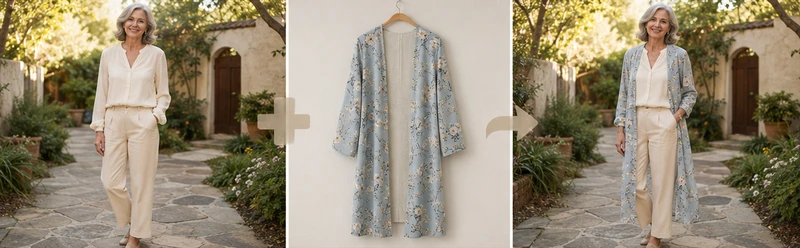
Older woman wearing a light blue floral outer layer transferred from a hanging garment photo

Try lightweight outerwear and longer layers

Cardigans, robes and long outer layers work best when the full garment length is visible in the reference. A complete model photo gives the AI enough body and scene context to place the garment with more realistic drape and scale.

  • Suitable for cardigans, robes and long coats
  • Full-length references improve hem placement
  • Natural lighting helps the garment match the scene
What changes

The requested garment, outfit layers and related fabric details from the clothing reference.

What should stay

The target person’s identity, pose, body proportions, crop, camera angle, lighting and background.

Best reference

A sharp, well-lit garment image that clearly shows neckline, sleeves, length, pattern and construction.

How to change clothes with two photos

Upload the model photo

Choose the person and scene you want to keep. A clear front or three-quarter view usually works best.

Add the clothing reference

Upload the garment alone, on a mannequin or worn by another person. Keep important details visible.

Generate and review

Check fit, fabric, hands, logos and preserved details before downloading or using the result commercially.

AI Clothes Changer for Reference-Based Virtual Try-On

Tool67 uses two images: a target model photo and a clothing reference. The goal is to transfer the garment while preserving the target person’s identity, pose, framing, background and natural photographic appearance. This reference-based workflow is useful for fashion previews, ecommerce concepts, wardrobe planning, marketing mockups and personal styling experiments.

Use a clear clothing photo

Choose a well-lit clothing image that clearly shows the garment shape, neckline, sleeves, length, fabric and important details. The clothing may be photographed alone, displayed on a mannequin or worn by another model.

Use a complete model photo

Keep the target person clearly visible, especially the body area where the new outfit should appear. Clear focus, natural lighting and an unobstructed body usually produce a more realistic clothing fit.

Match the camera viewpoint

Similar front, side or full-body viewpoints generally produce better results. The tool aims to retain the model’s identity, hairstyle, pose, body shape, camera angle, crop, environment, background, white balance and natural photographic look.

What can this AI clothes changer do?

Use it for dresses, shirts, jackets, coats, sweaters, skirts, uniforms, swimwear and other fashion styling. The system uses the second image as a clothing reference and is instructed not to copy the reference model’s face, body, pose or background.

Common uses for reference outfit transfer

People use a two-photo clothes changer to preview dresses, shirts, jackets, coats, suits, uniforms and coordinated outfits on an existing model photo. Fashion sellers can create early visual concepts, creators can test styling directions, and individuals can compare clothing ideas before purchasing. Results remain AI-generated previews and should be reviewed carefully before product, fit or purchasing decisions.

What to review before using the result

Check garment edges, sleeve length, logos, fasteners, hands, waistlines, hems, fabric patterns and any text on the clothing. AI outfit transfer can create realistic visual concepts, but it does not guarantee exact physical fit, sizing, tailoring or material behavior.

What images do I need to change clothes?

Upload one clear model photo and one clear clothing reference. The clothing can be photographed alone, on a mannequin or worn by another model.

Will the model and background stay the same?

The tool is designed to preserve the original model, pose, framing, camera angle, background and scene lighting while replacing only the clothing.

Can the clothing photo include another model?

Yes. The system uses the outfit as the clothing reference and is instructed not to copy the other model, face, pose or background.

How do I get the most realistic result?

Use clear, well-lit images, keep the target model fully visible and choose clothing and model photos with similar viewpoints.